

Financial Modeling Basics: Your Key to Business Success

Picture this: You’ve just started your own business – let’s say it’s a boutique bakery. You’ve got the best sourdough in town, and your pastries are the talk of the neighborhood. Life is good, right? But then, you sit down with your company’s financial statements, and you’re suddenly lost in a sea of numbers that make as much sense as a croissant doughnut hybrid (delicious, but seriously, how does that even work?).
Financial modeling is like having a recipe for your business’s financial future. Just like knowing that adding yeast makes dough rise, understanding the basics of financial modeling will help you predict how different decisions will impact your business.
In this article, I will break down financial modeling into bite-sized, digestible pieces – no financial jargon, I promise. I’ll explore what financial modeling is, its key components, the different types, and how to build your first financial model. We’ll also discuss common mistakes beginners make and how to avoid them.
By the end, you’ll have a basic understanding of financial modeling, which is like having a secret ingredient that can boost your business’s financial health. So, roll up your sleeves, and let’s get baking – I mean, let’s get started with financial modeling!
What is Financial Modeling?

So, what is financial modeling and how can it help you succeed?
In the simplest terms, it’s like a virtual crystal ball for your business. Financial models take in various details about your business – think of these as ingredients in a recipe – and then stirs them all together to predict your company’s financial future.
Now, let’s make this a bit more relatable.
Imagine you’re planning a big dinner party. You’d probably start by figuring out how many guests are coming (your sales), what ingredients you need to buy (your costs), and what dishes you’re going to cook (your products or services). Then, you’d probably try to estimate how much everything will cost and whether you’ll have enough food (croissant doughnut).
That’s essentially what a financial model does. It takes information about your business, like your sales, costs, and services, and uses that to forecast your profits. And just like you wouldn’t host a dinner party without doing some planning, you shouldn’t run a business without some financial modeling.
Why, you ask? Well, financial forecasting is crucial in making informed business decisions. It helps you anticipate potential challenges, identify opportunities, and measure the financial impact of different scenarios.
Without it, running a business is like baking a cake without a recipe – you might get lucky, but there’s a good chance you’ll end up with a financial flop instead of a profitable patisserie.
The Components of a Financial Model

Now that we’ve established what financial models are and why they are the secret sauce to your business success let’s get into the nitty-gritty – the key components of a financial model. Think of these as the flour, sugar, and eggs in your business recipe.
Assumptions: These are the base ingredients of your financial model – the things you know or can reasonably predict about your business. For instance, if you’re running a bakery like me, you might make assumptions about how many loaves of bread you’ll sell each day, the cost of your ingredients, and the price you’ll sell each loaf for.
Calculations: This is where you mix your ingredients together. You take your assumptions and perform calculations to forecast things like revenue (how much you’ll make from selling your bread), costs (how much you’ll spend on ingredients), and net income (your profit after all expenses).
Outputs: These are the results of your calculations, the freshly baked bread, if you will. The outputs give you valuable insights into your business’s future performance, such as your projected profits, cash flow, and return on investment.
Let’s look at an example. Bob runs a small bookstore and was struggling to manage his finances. After learning the basics of financial modeling, he started making assumptions based on his historical sales data, calculated his potential revenues and expenses, and projected his profits.
Bob discovered that while his sales were steady, his costs were creeping up, eating into his profits. By identifying this through his financial models, he was able to take action, negotiate better deals with suppliers, and improve his bottom line.
Understanding the components of a financial model turned Bob’s business around. It was like finding a long-lost treasure map leading him straight to profitability.
And the best part?
You can do the same. With a dash of patience, a sprinkle of effort, and a good understanding of these components, you’re well on your way to baking up a successful financial future.
Types of Financial Models
Now that you’re familiar with the components of financial models, let’s talk about the different types of models. Just like there are different recipes for different types of bread – sourdough, baguette, ciabatta – there are different financial models for different business scenarios. Here’s a quick rundown:
Discounted Cash Flow Analysis (DCF)
This is like your classic white bread recipe. It’s a staple in the financial modeling world. A discounted cash flow model estimates the value of an investment based on its future cash flows (net present value). Think of it like pre-ordering your ingredients in bulk to save money in the long run.

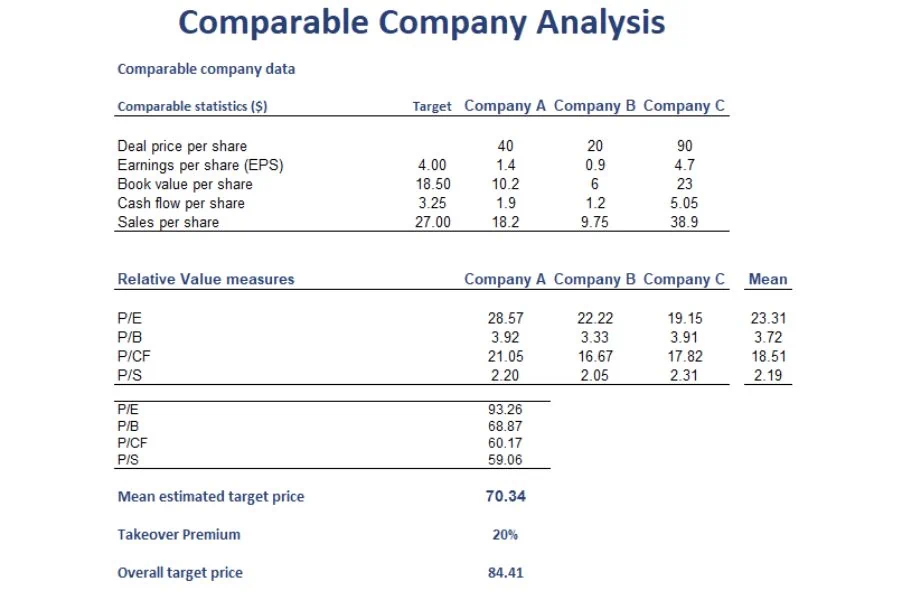
Comparative Company Analysis
This is akin to checking out what other successful bakeries are doing. In these financial models, you compare your company to similar ones in your industry to determine your business’s value.
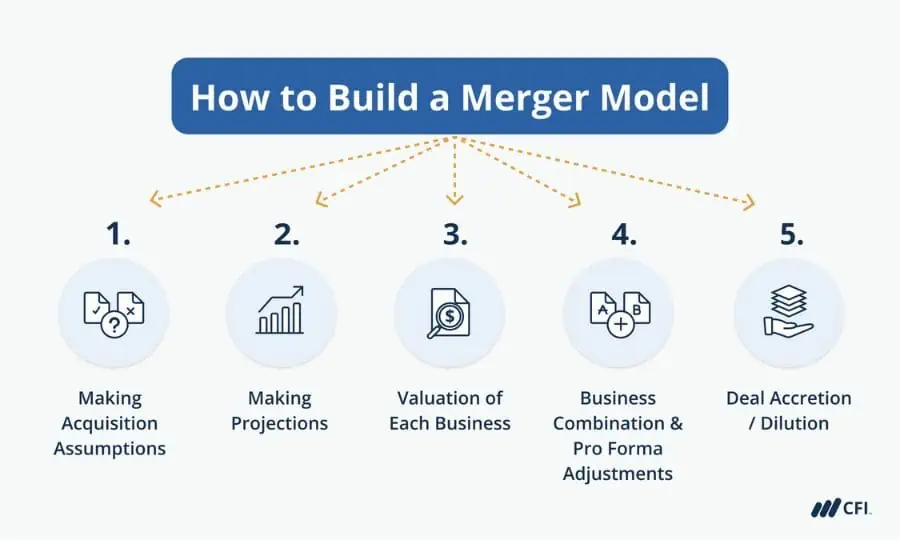
Mergers & Acquisitions (M&A) Models:
This is like a recipe for a wedding cake – it’s all about combining two things into something even better. M&A financial models are used when one company plans to buy or merge with another. They are often used in investment banking to help figure out if the new combined company will be profitable.
Budget Model:
Consider this your grocery shopping list. It helps you plan your future income and expenses to manage your cash flow better. It’s particularly useful for small businesses trying to keep their finances in check.
Forecast Model:
This is like your seasonal menu planning. It uses historical data to predict future performance. For instance, if your pumpkin spice pastries sell like hotcakes every fall, you’d forecast high sales for the next autumn too.
Choosing which financial models to use depends on your business scenario. A discounted cash flow analysis might be the way to go if you plan a major investment. If you’re considering buying another bakery, you’d want an M&A model. A budget or forecast model might be more your speed for everyday financial planning.
Remember, financial modeling isn’t a one-size-fits-all solution. It’s a toolbox filled with different tools. You just have to pick the right one for the task at hand. So, don your apron, grab your ingredients, and let’s get cooking – I mean, modeling!
Building Your First Financial Model
Getting ready to build your first financial model can feel like standing at Mount Everest’s base, gazing up at the peak. But don’t worry, just like any big endeavor, it’s all about taking it one step at a time. Before you know it, you’ll be standing on the summit, victorious, with a clear view of your financial future. So, let’s get started!
Step 1: Define Your Goal
First things first, you need to know where you’re heading. Are you trying to secure funding? Plan for the future? Make an investment decision? Your financial model should be tailored to your goal, just like choosing the right map for your journey.
Step 2: Gather Your Data
Just as you wouldn’t start baking without all your ingredients, don’t start modeling without your data. This includes historical financial information, market research, sales forecasts, and other relevant data.
Step 3: Choose Your Model Type
Now that you’ve got your goal and your data, it’s time to choose the right model for the job. Remember our bread recipes? Pick the financial models that best fits your needs.
Step 4: Set Your Assumptions
This is where you start mixing your ingredients. Make educated guesses about future sales, costs, and other variables. Be realistic but also prepare for different scenarios – the sunny day when all loaves sell out and the rainy day when you have leftovers.
Step 5: Do the Math
Now it’s time to roll up your sleeves and get baking! Use your assumptions to calculate your projected revenue, expenses, and profits. Don’t worry if numbers aren’t your strong suit; there are plenty of tools out there to help you out.
Step 6: Analyze Your Results
Congratulations, your bread is baked! Now, it’s time to taste it. Review your results, look for trends, and identify risks and opportunities. This is where the magic happens – where you turn data into actionable insights.
Building your first financial model might seem daunting, but every great baker started with their first loaf of bread. It’s okay if it’s not perfect. It’s okay if you make mistakes. You’re learning and growing, and that’s something to be proud of. So, take that first step, start your journey, and know you’re not alone. We’re here cheering you on every step of the way.
You’ve got this!
Common Mistakes in Financial Modeling and How to Avoid Them

We’ve all been there, standing in the kitchen, following a recipe to the letter, only to pull out a loaf of bread that’s more akin to a brick than a fluffy delight. Financial modeling, like baking, has its fair share of potential pitfalls, especially when you’re just starting out. But don’t despair! Every mistake is a learning opportunity, a chance to grow and improve.
Here are some common mistakes beginners often make in financial modeling and some tips on how to avoid them:
Overcomplicating the Model: Financial models, like the best recipes, don’t need to be overly complicated to be effective. In fact, overly complex financial models can lead to errors and confusion. Stick to the basics, keep it simple, and remember: you’re baking a loaf, not a seven-tier wedding cake.
Over-optimistic Assumptions: It’s easy to let your hopes for your business color your assumptions. But just as you can’t force yeast to rise faster by wishing it so, you can’t force sales to increase by being overly optimistic. Be realistic in your assumptions to avoid skewing your results.
Ignoring the Market: Just as you wouldn’t ignore a sudden flour shortage, don’t ignore market trends and conditions when building your model. Incorporate relevant market data to make your model more robust and accurate.
Not Testing Different Scenarios: When baking, you might try different oven temperatures or kneading times to see what works best. Similarly, you should test different scenarios in financial modeling to prepare for various outcomes. This can help you navigate any future financial storms.
Neglecting to Update Your Model: Just like a baker tweaks their recipe over time based on feedback and experience, you should update your model as new data becomes available. Much like stale bread, a stale model won’t yield the best results.
Remember, everyone makes mistakes when they’re learning something new. If you’ve made any of these errors, pat yourself on the back for trying and know you’re in good company. And just like kneading dough, you’re making it better every time you work on your financial models. So keep going, keep growing, and soon enough, you’ll be serving up financial forecasts like a pro!
Quick Recap
Like the satisfying feeling of dusting off your hands after kneading a perfect batch of dough, we’ve reached the end of our financial modeling journey. Let’s take a moment to appreciate the ground we’ve covered.
We’ve learned that financial models are the bread and butter of business finance. They’re essential tools for making informed decisions, planning for the future, and understanding the financial health of your business. Whether you’re baking a classic white loaf (DCF) or a fancy wedding cake (M&A), there’s a financial model for every situation.
Remember, it’s not about creating the perfect model on the first try, any more than baking a perfect loaf on your first attempt. It’s about learning, growing, and improving with each iteration. And just like every loaf you bake adds to your experience as a baker, every model you build sharpens your skills as a financial whiz.
Now that you’ve got this fresh loaf of knowledge, you’re well on your way to becoming a master baker in the world of finance. Your business’s financial future is looking brighter (and tastier) already!
But don’t stop here! Just like there are endless recipes to explore in the world of baking, there are countless other finance topics to dive into. Check out our other resources for more practical advice, relatable analogies, and helpful tips to continue empowering yourself in managing your business finances. Remember, the kitchen – and the world of finance – is yours to conquer. So, roll up those sleeves and keep kneading, mixing, and rising to the occasion!
Frequently Asked Questions
What do you mean by financial Modeling?
Financial modeling is like creating a recipe for your business’s financial future. It’s a mathematical representation of how different financial elements interact and impact one another. Just like a recipe, it combines various ingredients (financial data) to predict outcomes, such as profits or losses.
What are the 4 major components of financial modeling?
The four major components of financial modeling are the income statement, the balance sheet, the cash flow statement, and the supporting schedules. Think of these as the flour, yeast, water, and salt in your financial bread recipe.
Is financial modelling difficult?
Just like baking a loaf of bread can seem intimidating initially, financial modeling can also appear challenging. However, with practice, patience, and the right tools, anyone can learn how to build effective financial models.
What do you mean by financial model?
Financial models are like a blueprint of your business’s financial health. It’s a tool that helps you understand how various financial aspects of your business interact, enabling you to make informed decisions and plan for your company’s future financial performance.
What are the types of financial models?
There are several types of financial models, such as Discounted Cash Flow (DCF), Comparable Company Analysis (Comps), Leveraged Buyout (LBO), and Merger & Acquisition (M&A) models, among others – like having different recipes for various types of bread.
What is the 3 model financial model?
The three-statement model is like a three-tiered cake, where each layer represents one of the major financial statements – income statement, balance sheet, and cash flow statement. It’s a comprehensive model that provides a complete picture of a company’s financial performance.
What are the basics of financial Modelling?
The basics of financial modeling involve understanding key financial concepts, gathering and analyzing relevant data, setting assumptions, and creating formulas to predict financial outcomes. It’s like learning the fundamentals of baking before attempting your first loaf.
How to do financial modelling for beginners?
For beginners, you can learn financial modeling by starting with basic financial concepts. Then, gather your data, set your assumptions, choose your model type, perform calculations, and analyze the results. Think of it as learning to bake a simple loaf before moving on to more complex pastries.
What are the types of financial Modelling?
Types of financial modeling include Discounted Cash Flow (DCF), Comparable Company Analysis (Comps), Leveraged Buyout (LBO), and Merger & Acquisition (M&A) models, among others. Each model serves a different purpose, much like different baking recipes.
How do you do financial Modelling?
Doing financial modeling involves defining your goal, gathering data, choosing the right model, setting assumptions, performing calculations, and analyzing the results. It’s like following a recipe to bake a specific type of bread.
What are the objectives of financial Modelling?
The objectives of financial modeling are to forecast future financial performance, make informed business decisions, assess risks, and plan for the future. It’s like using a recipe to predict how your bread will turn out and make necessary adjustments.
What is financial Modeling?
Financial modelling refers to the process of creating a mathematical representation of a company’s financial situation. It’s like using a recipe to predict the outcome of a baking process.
What is an example of financial modeling?
An example of financial modeling could be a startup creating a model to forecast its revenue and expenses for the next five years to attract investors. It’s akin to a baker predicting the cost and potential profit of opening a new bakery.
How do you do financial modeling?
Financial modeling involves gathering relevant data, selecting the appropriate model, setting assumptions, performing calculations, and analyzing the results. It’s similar to following a recipe when baking.
What is a business model finance?
A business finance model is a tool that outlines how a company creates, delivers, and captures value financially. It’s like a recipe that explains how a bakery turns flour and other ingredients into profitable loaves of bread.
What is an example of a financial model in business?
An example of a financial model in business could be a Discounted Cash Flow (DCF) model used by a company to determine the value of an investment. It’s like a baker calculating the cost-effectiveness of using organic flour.
What is financial modeling skills?
Financial modeling skills include a strong understanding of accounting and finance principles, proficiency in Excel, analytical thinking, attention to detail, and problem-solving abilities. It’s like having a solid understanding of baking techniques, being adept with kitchen tools, and having a keen sense of taste and creativity.
Is financial modeling a hard skill?
Financial modeling is a hard skill as it requires technical knowledge, proficiency in tools like Excel, and a strong understanding of finance principles. But just like baking, it can be learned and mastered over time with practice and dedication.
How do you create a financial model for a company?
Creating a financial model for a company involves defining the purpose of the model, gathering relevant data, selecting the appropriate financial model, setting assumptions, performing calculations, and interpreting the results. It’s similar to creating a customized baking recipe for a specific type of bread.
What is an example of a financial model?
An example of a financial model could be a startup’s revenue projection model. This model would estimate future revenues based on factors like market size, growth rate, and the startup’s marketing strategies. It’s like a baker estimating the number of loaves they’ll sell based on the popularity of different bread types and their marketing efforts.
Have any questions? Are there other topics you would like us to cover? Leave a comment below and let us know! Also, remember to subscribe to our Newsletter to receive exclusive financial news in your inbox. Thanks for reading, and happy learning!