

The Easy Guide To Self-Service Analytics

Hello there! I’m excited to share my journey with you, a journey that began when I first stumbled upon the world of self-service analytics.
Picture this: I was a fresh-faced finance enthusiast, eager to make sense of the numbers that floated around me. I had spreadsheets for breakfast, charts for lunch, and ratios for dinner. But one day, amidst an endless sea of data, I discovered the magic wand that is self-service analytics.
In this article, we’re going to embark on a thrilling adventure together. We’ll demystify self-service analytics, turning it from a daunting high-wire act into a fun, rewarding, and most importantly, manageable part of your business strategy. I’ll walk you through understanding key concepts, choosing the right tools, analyzing your data, and finally, making strategic decisions based on your newfound insights. So, buckle up and get ready to become the ringmaster of your own data circus!
Key Takeaways
Self-service analytics is a type of business intelligence that allows business users, regardless of their technical expertise, to access and analyze data without the need for IT or data anlysts. This empowers individuals across an organization to explore data, gain insights faster, and make data-driven decisions.
The Power of Self-Service Analytics

Think of self-service analytics as your friendly neighborhood superhero, but instead of fighting crime, it’s battling the chaos of raw data. In its simplest form, self-service analytics is a tool that allows everyday folks like you and me to access, analyze and visualize data without needing a PhD in Computer Science.
It breaks down data silos and puts the power of data directly into our hands, empowering us to make informed decisions based on real, solid facts.
In our increasingly digital world, where data is as abundant as your favorite coffee shop’s lattes, self-service analytics has become an indispensable asset. It helps us sift through mountains of information, finding the nuggets of gold that lead to better business strategies, improved customer experiences, and ultimately, growth.
Let’s look at a real-life example. Imagine a small online bookstore, “Book Haven.” They were doing okay, but they knew they could do better. Enter self-service analytics. By using these tools, Book Haven was able to identify which books were their best sellers, when customers were most likely to make purchases, and what marketing strategies were working best. With these insights, they managed to increase their sales by a whopping 30% in just six months!
Benefits Of Self Service Analytics Platform
Let’s dive into the benefits that’ll have you doing a victory dance:
1. Freedom to Fly Solo
Remember the first time you rode a bike without training wheels? The thrill of independence? That’s what a self-service analytics platform brings to the table. No more waiting for IT or data specialists to pull up the information you need, every business user can perform data analysis.
2. Speedy Insights
Imagine you’re in a cooking competition and the clock is ticking. You wouldn’t want to wait for someone else to chop your vegetables, would you? Similarly, with self-service analytics, you’re the chef in your data kitchen. You can whip up data driven insights faster than you can say “data-driven decision making”. Talk about a speedy serving of success!
3. Cost-Efficiency
Let’s face it, hiring a team of data scientists can make your wallet feel lighter than a helium balloon. With a self-service analytics platform, you’re essentially getting a Swiss Army knife of data tools that can help you cut costs without compromising on quality.
4. Empowering Your Team
Imagine if every member of your team could become a data detective, uncovering clues and solving business puzzles. With a self-service analytics platform, that’s totally possible! It empowers all business users in your organization to dive into data and make informed decisions.
5. Flexibility
Ever tried putting together a puzzle with missing pieces? Frustrating, isn’t it? With traditional analytics, you’re often stuck with whatever data they give you. But with self-service, you can customize your data exploration to suit your specific needs.
Understanding Key Concepts
Alright, let’s dive into the deep end of the pool where the big fish of jargon swim. Don’t worry, I’m here with you, and together we’ll make sense of these technical terms in self-service analytics.
Data Warehousing

Now, don’t let this term scare you off. Think of a data warehouse like your grandma’s attic, where she stores all those family heirlooms and memorabilia. Just like how her attic stores different items from various eras, a data warehouse stores raw data collected from different sources over time. This stored data is then ready for us to explore whenever we need it – like whenever we get a sudden urge to reminisce over old family photos.
Data Mining
Imagine you’re a gold miner in the wild west. You sift through mountains of soil and rocks to find those precious gold nuggets. Similarly, in data mining, we sift through large sets of data to discover patterns and relationships that are as valuable as gold nuggets in making informed business decisions.
Business Intelligence
Business intelligence, or BI, is like the brains of your business. It’s where all the data comes together and is analyzed by various business users to provide insights and strategic recommendations for your business operations. Unlike traditional business intelligence that requires trained data analysts, with self-service business intelligence, you have the power to generate reports and access this intelligence on demand without having to rely on a team of experts.
Predictive Analytics

This one sounds fancy, right? But let’s break it down. It’s like when weather forecasters predict if it’s going to rain tomorrow based on today’s weather patterns. They analyze past and present data to forecast future trends. Similarly, with predictive analytics, we use historical and current data to make educated guesses about future outcomes.
Implementing Self-Service Analytics: Step-by-Step Guide
Ready to start enabling self-service analytics? Excellent! Let’s break this journey down into bite-sized pieces, making it as easy as pie (and who doesn’t love pie?).
Step 1: Identifying Your Business Needs
First things first, let’s have a heart-to-heart chat with your business. Ask it, “Dear business, what do you need?” Are you trying to boost sales? Improve customer satisfaction? Streamline operations? This is a crucial first step because it sets the stage for everything that follows.
Step 2: Collecting the Right Data
Now that you know your business needs, it’s time to gather the right data. Think of it as gathering ingredients for a recipe. You wouldn’t use apples when the recipe calls for oranges, right? Similarly, if your goal is to increase sales, you’ll want data related to customer buying habits, popular products, peak buying times, and so on. Remember, quality over quantity is the key here.
Step 3: Choosing the Right Self-Service Analytics Tools
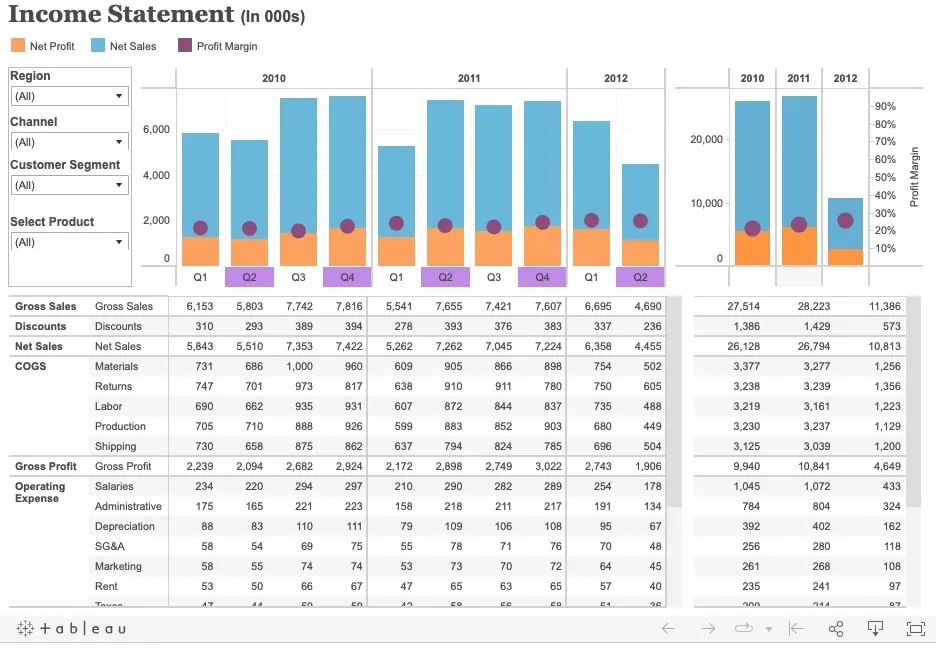
You’ve got your data, now you need the right tools to make sense of it all. Just as you would choose the right utensils for cooking, you need to select the right self-service analytics tool that suits your needs. Modern self-service analytics tools include:
- Tableau
- Power BI
- QlikSense
- Domo
- Looker
- Mode
Step 4: Training Business Users
Now that you have the right data and tools, it’s time to teach your business how to use them. Remember, this is a two-way street – you need to understand what your business needs, and they need to understand how to use the tools effectively. Provide training sessions, tutorials, and support to ensure everyone is on the same page.
And don’t just train them on the tools; data literacy is equally important to use self-service bi. Make it a team effort to fully harness the power of self-service analytics.
Step 5: Making Data-Driven Decisions
Now comes the exciting part – using your analyzed data to make strategic decisions! It’s like finally seeing the complete picture after putting together a jigsaw puzzle. The insights you glean from your data can guide you in making smarter decisions, whether that’s launching a new product, tweaking your marketing strategy, or improving customer service.
Learn how to empower your business with self-service analytics for smarter, data-driven decisions.
Overcoming Common Challenges
Let’s take a look at some of these common hurdles and how to leap over them.
Challenge 1: Information Overload
Once, while working on a project, I found myself buried under heaps of data, feeling utterly overwhelmed. But then it hit me – I didn’t need all that data. I needed to focus on the specific data relevant to my goals. So remember, when you’re faced with a mountain of data, keep your business needs in mind, and don’t be afraid to filter out the noise.
Challenge 2: Skill Gap
Let’s face it; self-service data analytics can feel like learning a new language. And just like learning any language, it takes time and practice. I recall feeling like I was trying to decipher hieroglyphics when I first started. But with time, patience, and plenty of practice, I got the hang of it. So don’t fret if you feel like you’re fumbling in the dark. Keep at it, and soon enough, you’ll be speaking ‘analytics’ fluently.
Challenge 3: Proper Data Governance
Data governance refers to the management of data assets and involves establishing policies, processes, and procedures for ensuring that data is accurate, secure, and accessible. Without proper data governance, self-service analytics can quickly become chaotic and unreliable. So make sure to have a clear plan in place for how your team will manage and maintain your data.
Frequently Asked Questions
Why are self service analytics important?
Self-service analytics is crucial in today’s data-driven world as it democratizes data access and fosters a culture of informed decision-making. It enables business leaders in various departments like sales, marketing, customer support, and product development to access the data they need to make impactful decisions. It also reduces reliance on IT teams and speeds up the process of gaining insights.
What is the difference between self-service and guided analytics?
While both are forms of business intelligence, the key difference lies in the level of user autonomy. Self-service analytics gives users the ability to access and analyze data independently, while guided analytics involves more structured analytical processes, often with the help of BI specialists or advanced algorithms to direct users towards specific insights.
What is a self-service analytics job description?
A self-service analytics role typically involves assisting users in accessing and interpreting data to make informed decisions. This could include helping to create dashboards, training line of business professionals on data analysis tools, ensuring data governance, and providing support for data-related queries.
What are the use cases for self-service analytics?
Self-service analytics can be used across a wide range of fields. For instance, in sales, it can be used for analyzing customer buying patterns to enhance sales strategies. Marketing teams can use it to measure campaign performance and understand audience behavior. Similarly, HR departments can use it to analyze employee data for talent management and retention strategies.
What is a self-service data platform?
A self-service data platform provides an environment where users can independently access and work with data. This type of platform often includes tools for data preparation, integration, visualization, and analysis, enabling users to derive insights from data without requiring extensive technical skills.
Have any questions? Are there other topics you would like us to cover? Leave a comment below and let us know! Also, remember to subscribe to our Newsletter to receive exclusive financial news in your inbox. Thanks for reading, and happy learning!