
Your Roadmap For Navigating Digital Finance Transformation

Welcome, fellow finance adventurers! As we navigate the ever-changing landscape of modern business, there’s one buzzword you’ve likely heard echoing in the halls of enterprises far and wide – digital finance transformation. It’s not just a fancy term thrown around at board meetings but a crucial pivot that’s shaping the world of business finance as we know it.
Just as Lewis and Clark couldn’t have explored the American West without their trusty compass, businesses today can’t expect to stride confidently into the future without embracing digital transformation. It’s the guide that can lead us through the wilderness of outdated practices and into the promised land of efficiency, accuracy, and strategic insight.
Regardless of your background and experience, this guide will provide the tools you need to transform your financial operations successfully. So buckle up, grab your metaphorical compass, and let’s get started!
Quick Overview
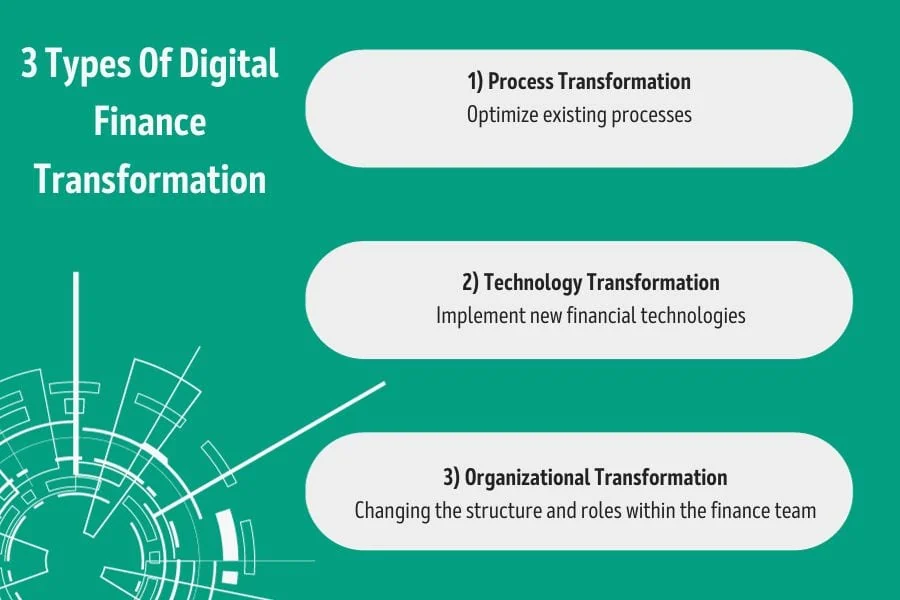
Finance transformation is a strategic initiative to improve the efficiency, effectiveness, and agility of a company’s financial functions. This involves modernizing systems, automating processes, and redefining roles and responsibilities within the finance team.
The primary goals are to streamline processes, reduce operating costs, improve accuracy and timeliness of financial data, enhance compliance, and provide strategic insights to drive business growth.
Understanding Digital Finance Transformation
Before we jump into the deep end, let’s take a moment to understand what digital finance transformation really means.
In its simplest terms, digital transformation is the process of using digital technology to improve and automate financial operations and processes. It’s like giving finance organizations a tech-savvy makeover to make it more efficient, accurate, and strategically insightful.
Imagine your business as a classic car. It’s reliable, it’s done a great job so far, but it’s starting to show its age. You’re spending more time fixing it than actually driving it. Now, imagine taking that classic car and fitting it with a state-of-the-art electric engine, a GPS system, and even a self-driving feature. That’s digital transformation – it’s about upgrading your business with the latest technology to drive it forward more efficiently and effectively.
Now, let me share a little story from my own experience. When I first heard about digital transformation, I was working as a finance manager at a mid-sized company. We were still using spreadsheets for everything, and when I say everything, I mean everything. The mere mention of “digital transformation” sent shivers down my spine, conjuring up images of robots taking over our jobs and complex software we’d never be able to understand.
But as daunting as it seemed, sticking to our old ways was becoming increasingly unsustainable. Our processes were slow, error-prone, and didn’t provide the strategic insights we needed to drive the business forward. It was clear that the finance function needed to change, but the path forward was shrouded in uncertainty and fear of the unknown.
The Need for Finance Transformation
Now that we’ve gotten our feet wet with digital transformation in finance, let’s explore why it’s not just a nice-to-have but a must-have in today’s business landscape.
In the age of digital technology, the pace of business has accelerated like a sports car on an open highway. Decisions need to be made faster, data needs to be processed quicker, and financial insights need to be available at the drop of a hat. Sticking to traditional, manual methods of managing finances is like trying to compete in a Formula 1 race with a horse-drawn cart. Sure, it might get you there eventually, but you’ll be left eating the dust of your competitors who have embraced the power of digital transformation.
But don’t take my word for it, let’s look at some real-life examples of finance organizations that rolled out digital technologies.
Netflix’s Digital Transformation
Ever heard of a little company called Netflix? Of course, you have! But did you know that their success is partly due to their early adoption of digital tools? Back when Blockbuster was still a thing (rest its soul), Netflix’s finance function was already leveraging the power of data analytics for strategic decision-making, helping it anticipate viewer preferences and make smarter investment decisions. Today, they’re a streaming giant with over 200 million subscribers worldwide.
Domino’s Finance Transformation

Another shining example is Domino’s Pizza. Yes, the pizza company! They transformed their finance function by integrating advanced analytics and AI technologies, which helped improve their sales forecasting and resource allocation. This led to more efficient operations and increased profitability, proving that even the most traditional businesses can benefit from a tech makeover.
So, whether you’re in the entertainment industry, food service, or any other sector, digital finance transformation is a key ingredient for success in the 21st-century business world. It’s not about replacing humans with robots, but enhancing our capabilities and allowing us to focus on what we do best – strategizing, innovating, and driving growth. So, let’s roll up our sleeves and get ready to dive into the nitty-gritty of how you can digitally transform your finance function!
Step-by-Step Guide to Digital Finance Transformation

Step 1: Assessing Your Current Financial Landscape
Before you plot a course to your destination, you first need to know where you’re starting from. Conduct a thorough assessment of your current financial operations and processes. Look at everything from your accounting systems to your financial reporting. And remember, this is like cleaning out your garage – it’s going to look worse before it gets better! A common pitfall at this stage is getting overwhelmed by the sheer amount of dust bunnies (or in our case, outdated spreadsheets) you’ll uncover. But fear not! This is an essential step towards your digital transformation journey.
Step 2: Identifying Opportunities for Improvement
Once you have a clear picture of your current state, the next step is to identify areas that can benefit from digital transformation. This may feel akin to finding a needle in a haystack, but trust me, that needle is worth its weight in gold. Remember, Rome wasn’t built in a day, and neither will your digital finance transformation. It’s okay to start small and gradually expand your scope as you become more comfortable.
Step 3: Get Finance Leaders Onboard
In any transformational journey, having the right allies is crucial for success. Hence, before embarking on your digital transformation, it’s essential to get finance leaders onboard. These leaders play a vital role in driving change, embracing new technologies, and fostering a culture of innovation. They also serve as influencers who can rally the team, build consensus, and overcome resistance to change.
Step 4: Selecting the Right Technologies
Now comes the fun part – shopping for new finance technology! Well, it’s not exactly like a spree at the mall, but it can be just as exciting. There’s a whole world of financial technologies out there, from cloud-based accounting systems to AI-driven data analytics tools. I remember feeling like a kid in a candy store when I first started exploring these technologies. But remember, it’s not about getting the shiniest toy, but the one that best fits your business needs.
Step 5: Implementing the Changes
Implementing new technologies and operational processes is like assembling a piece of IKEA furniture. It might seem daunting at first, with all those parts and instructions, but once you take it step by step, you’ll start to see the big picture. And just like that IKEA bookshelf, the satisfaction you’ll feel once everything is in place will make all the hard work worth it.
Step 6: Training and Support
Once the new systems are up and running, it’s crucial to train your finance professionals and provide ongoing support. This stage often feels like herding cats – everyone’s running in different directions, and there’s always one who can’t figure out how to log in! But with patience, practice, and a healthy dose of humor, your team will soon be navigating the new systems like pros.
Step 7: Review and Continual Improvement
Finally, remember that digital transformation in finance is not a one-and-done deal. It’s an ongoing process that requires regular review and continual improvement. This might sound like an uphill battle, but remember every step brings you closer to the summit. And the view from the top – a streamlined, efficient, and data-driven finance function – is definitely worth the climb!