
The Easy Guide To Annual Percentage Rate (APR)
Annual Percentage Rate (APR) is the yearly cost of borrowing, including interest and fees. It helps you understand the true cost of a loan and compare different offers. In this article, we’ll break down what APR is, how it’s calculated, and why it matters for your financial decisions.
Key Takeaways
- APR is the all-inclusive price tag of loans, covering not just interest but also fees, so you can make informed borrowing decisions.
- Understanding the difference between APR and APY is key; while APR shows the cost of borrowing, APY reveals your potential earnings from investments.
- Your business credit score can significantly impact the APR you receive, so keeping it in good shape is like putting on your financial best for a loan application.
What Is Annual Percentage Rate (APR)?
The Annual Percentage Rate (APR) is the yearly cost of borrowing money, expressed as a percentage of the principal amount. It includes not just the interest rate but also additional fees and charges that lenders apply, giving you a complete picture of what you’re signing up for. Imagine it as the all-inclusive price tag on a loan, helping you understand the true cost of borrowing.
Why is APR so important? Simple: transparency. APR allows you to compare different loan options more effectively by incorporating both the interest rate and fees. It’s like comparing apples to apples in a fruit market.
Plus, consumer protection regulations require lenders to clearly state the APR, preventing any misleading advertising. Credit card companies are required to disclose the APR before they issue a card. They must also include the APR on monthly statements.
How Does APR Work?
APR works by simplifying the complex world of borrowing costs. It provides a clear metric that helps you understand and compare the true costs of different loans. When lenders calculate APR, they include the nominal interest rate and other loan-related costs, giving you a more comprehensive view of what you’ll be paying over the year.
However, it’s essential to remember that APR doesn’t always convey the total amount of interest paid over a year. While the Truth in Lending Act mandates APR disclosure, it doesn’t account for periodic compounding, which can affect the total interest.
Despite this, APR remains a valuable tool for comparing loans and understanding your financial commitments.
How Is APR Calculated?
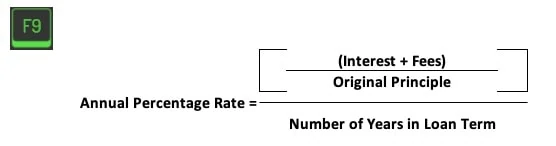
Calculating APR might seem daunting, but it’s quite straightforward once you break it down. The formula involves adding the total interest charges and fees, dividing this sum by the loan amount, and then adjusting for the loan term. For instance, if you’re dealing with a daily interest rate, you multiply it by 365 to annualize it. This process ensures that the APR reflects the annual cost of borrowing, including apr calculations.
Consider the number of days in the loan term as the key to accurate APR calculation. This step normalizes the cost over a year, providing a consistent metric for comparison. Understanding the APR calculation allows for better evaluation of loan offers and more informed financial decisions.

Finding Information on Interest Rates
When it comes to interest rates, the internet is your best friend. Almost every financial institution explains its interest rates and compounding programs. To that end, if you’re looking for a good place to start, try Googling “Interest Rates + Your City/Country.” This should give you a variety of resources with information on interest rates in your area.
Free Annual Percentage Rate (APR) Calculator
APR Calculator
Example Of Calculating APR For A Term Loan

Different Types of APR
APR isn’t a one-size-fits-all figure; it varies based on the type of transaction. For credit cards, you’ll encounter several types of APRs, including Purchase APR, Cash Advance APR, Balance Transfer APR, Penalty APR, and Introductory APR. Purchase APR applies to everyday transactions, while Cash Advance APR, often higher, kicks in when you withdraw cash using your credit card. Balance Transfer APR is relevant when you move debt from one card to another. Additionally, understanding your credit card APR is essential for managing your finances effectively.
Promotional APRs, such as Introductory APRs, are designed to attract new customers with lower or zero rates for a limited period. However, beware of Penalty APRs, which can skyrocket if you miss payments. Understanding these different types helps you manage your finances better and avoid unexpected costs.
Fixed APR vs. Variable APR
Choosing between a fixed and a variable APR can feel like picking between stability and potential savings. A fixed APR ensures your interest rate remains constant throughout the loan’s duration, providing predictability and ease in budgeting. It’s like having a steady anchor in the financial storm.
On the other hand, a variable APR fluctuates based on market conditions, often tied to a benchmark like the prime rate. While this can lead to lower rates in favorable markets, it also means your payments can increase if rates rise. Weighing the pros and cons of each can help you decide which type suits your financial strategy best.
APR vs Nominal Interest Rate
APR and interest rates are often used interchangeably, but they’re not the same. The interest rate is the cost of borrowing the principal amount, usually expressed as a percentage. APR, on the other hand, represents the total annual cost of borrowing, including fees and other charges. This makes APR a more comprehensive measure of your loan’s true cost.
While APRs can be higher than nominal interest rates due to these additional costs, they provide a clearer picture of what you’ll actually pay over the loan term. Understanding this distinction is crucial for evaluating loan offers and making sound financial decisions.
APR vs. Annual Percentage Yield (APY)
Though they sound similar, APR and Annual Percentage Yield (APY) serve different financial purposes. APR represents the total yearly cost of borrowing, incorporating both interest and fees. It’s a straightforward calculation that doesn’t account for compounding. In contrast, APY includes the effect of compounding interest, giving a more accurate picture of your potential earnings or costs over time.
A 12-month certificate of deposit (CD) with a 5% APR would have an APY of approximately 5.116% due to monthly compounding. This difference becomes more pronounced with frequent compounding periods. Both metrics are crucial for making informed financial decisions.
Example Comparison: APR vs. APY
Let’s put theory into practice with a concrete example. Imagine you take out a $5,000 personal loan at a 5% APR, which reflects the loan’s interest rate. Over a year, you’d make monthly payments totaling around $428.04, resulting in a total interest cost of how much interest $428.04. On the flip side, if you deposit the same amount into a CD, the interest earned, thanks to compound interest, would be about $255.81 over the same period.
This example illustrates how APR and APY can impact your finances differently. While APR helps you understand borrowing costs, APY shows how much you can earn from savings and investments. Keeping both in mind ensures you make the most financially sound decisions.
Factors Influencing Your APR
Several factors influence the APR you’re offered. Your business credit score is a significant determinant; higher credit scores generally lead to lower APRs. Conversely, poor credit profiles often result in higher rates due to perceived risk. Different loan types also come with varying APRs, reflecting the risk and repayment terms associated with each.
Lender fees play a crucial role as well. High charges can significantly increase the overall APR, impacting your borrowing costs. Lender policies and practices further shape the APR offered, so it’s essential to understand these elements when evaluating loan options.
Business Credit Score Impact
Your business credit score holds substantial sway over the APR you receive. Borrowers with lower scores are often saddled with higher APRs due to the higher perceived risk. Maintaining a good credit score, however, can help you secure lower rates and reduce total payments.
Improving your credit score involves consistent, timely payments and maintaining a low credit utilization ratio. Additionally, avoiding multiple hard inquiries and keeping old credit accounts open can positively influence your score. These steps can significantly enhance your credit profile and lower your borrowing costs.
Loan Type and Lender Fees
The type of loan you choose and the fees imposed by the lender also affect your loan’s apr. Secured loans, such as mortgage loans and auto loan, typically have lower APRs because they present less risk to lenders. Unsecured loans, like personal loans and credit cards, often come with higher APRs due to the increased risk.
Lender fees, including origination fees and closing costs, can further inflate the APR. It’s crucial to compare these fees across different lenders to find the best deal. Shopping around and understanding the full spectrum of costs helps in making more informed decisions and potentially securing a lower APR.
How to Use APR for Comparing Loans
Using APR to compare loans can save you a lot of money and headaches. APR offers a fuller picture of the loan’s true costs, beyond just the interest rate. When evaluating different loans, it’s essential to consider the APR along with the loan terms and fees to identify the best deal.
Many lenders display their APRs online, making it easier to compare offers before applying. However, be cautious as the same APR can result in different total interest paid depending on the loan terms. Focusing on APR helps in making more informed financial decisions and avoiding hidden costs.
Common Misunderstandings About APR
APR is a useful metric, but it’s not without its pitfalls. One common misunderstanding is that APR includes all possible fees, which isn’t always the case. Certain fees, such as late fees, attorney fees, and other fees, are often excluded, potentially understating the actual loan costs.
Another misconception is that a low APR always means a better deal. Sometimes, low APRs are introductory rates that revert to much higher rates after a certain period. Additionally, APR might not accurately represent true borrowing costs for short-term financial products. Understanding these nuances can help you avoid common traps and make better financial decisions.