GL reconciliation in Microsoft Copilot, from one chat to an app your team runs

I ran one GL reconciliation through Microsoft 365 Copilot Chat, Cowork and Code, with the prompt for each mode and what each one costs.

Finance runs on processes, so this category is organised the way your month runs. Close, reconciliation, forecasting, variance, reporting, AP, and the FP&A templates sitting underneath them, each with the AI step called out. The biggest category on the site, and the one I would read first.
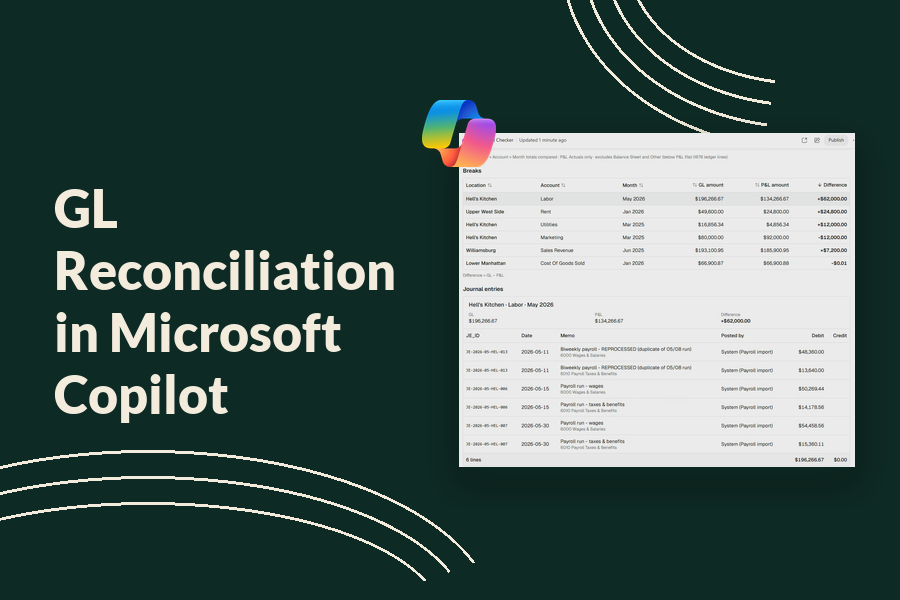
I ran one GL reconciliation through Microsoft 365 Copilot Chat, Cowork and Code, with the prompt for each mode and what each one costs.

Accounting gets pitched AI as a way to close faster. That is the least interesting thing it does, and it is the thing most teams try first. The close is a process problem. Most of what slows it down is a person waiting on another person, and no model fixes that. The accounting function has a different set of jobs, and AI is genuinely good at some of them. So this is seven jobs where it earns its place in an accounting function, three where it does not, and the line between them. If you want the close specifically, automating the month-end close covers that, and account reconciliation covers the single biggest piece of it. Seven jobs it does well 1. Reading a contract and…

Every list of AI use cases in finance is organized the same way, by tool. Here is what ChatGPT does, here is what Copilot does, here is a bullet about fraud detection that applies to a bank and not to you. That is backwards. You do not have a ChatGPT problem. You have a close that takes nine days and a forecast that gets rebuilt from scratch every month. So this is sorted by where the work falls in your month. Each one links to the place I have written it up, and each carries a verdict on whether it is worth your time yet, because a fair number of them are not. Checked 29 August 2026. The short version If you read nothing else,…

Before anything else, a warning about the other pages you are reading today. Most round-ups list Float at around $25 or $59 a month. I checked Float’s own pricing page while writing this. The published plans are $130, $265 and $389 a month on monthly billing, before the multi-entity add-on and before VAT. The listicles are out by roughly five times. So every figure below came from the vendor’s own pricing page today, and where a vendor does not publish a price, this page says that instead of guessing. Prices checked 30 August 2026. A note on what this page does not have The other software round-ups here carry an F9 rating out of 45, because I scored those tools myself against a fixed set…
FP&A stands for Financial Planning and Analysis. It is the team that builds the budget, updates the forecast, explains why the numbers came out the way they did, and sits in the meeting where somebody decides what to do about it. That is the definition. The rest of this is what the job is like from inside it, because I do it, and because most of what is written about FP&A is written by companies selling planning software. The four things an FP&A team does Strip away the org chart and it comes down to four jobs. Every FP&A role is some mix of these, and which mix you get depends far more on the company than on the title. Planning is building the annual…

I turned Claude into my accountant. It coded every transaction, caught $115K in problems, and booked the month-end entries. Here’s exactly how the close ran, step by step.

Learn how to use Claude Cowork to build a 13-week cash flow forecast from your actual bank and P&L data.

Read this step-by-step guide on power query data cleaning and start getting your spreadsheets to clean themselves.

I’ll walk you through exactly how to automate a month-end report from start to finish with tools you already have on your computer.
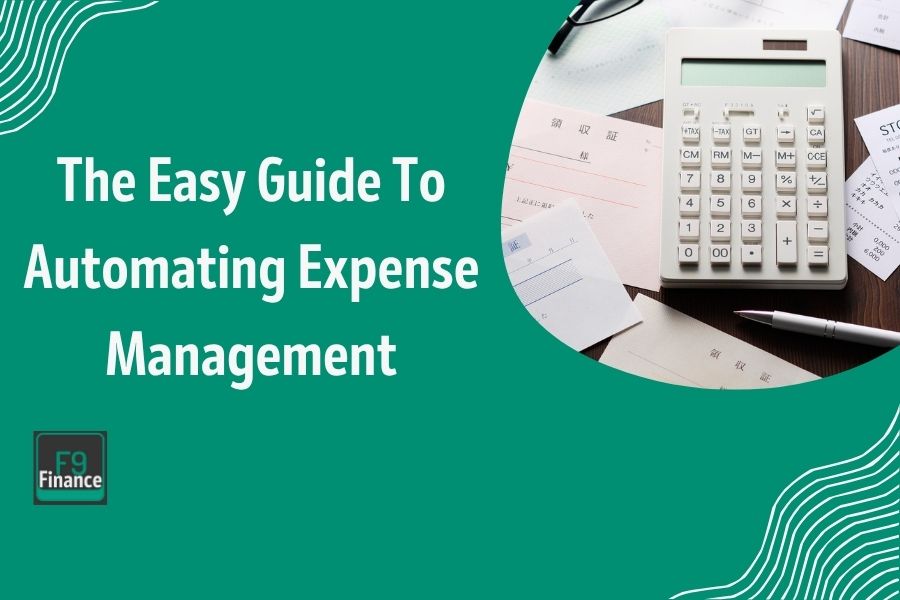
A few years back, I found myself on a Sunday night buried in a pile of wrinkled receipts, trying to figure out if the $18 Uber from the airport was personal or billable. My inbox had expense reports labeled “Final_Final_V2.xlsx” and my calendar had a 9 AM meeting with the CFO who wanted last month’s T&E variance breakdown. Meanwhile, I hadn’t even submitted my own expenses for three months. Sound familiar? Expense management is one of those finance back-office tasks that should be easy… but somehow turns into a dumpster fire of lost time, blurry PDFs, and awkward Slack messages asking, “Hey, what was this $327 charge for?” It’s painful. It’s slow. And worst of all, it’s usually manual. The traditional manual process is filled…
End of content
End of content